Toyota Replaces CEO Koji Sato Amid Shifting Global Auto Industry Pressures
By Newslab Admin
Updated
44 views
Toyota Motor Corp. has announced a surprise leadership change, replacing Chief Executive Officer Koji Sato after just three years in the role, despite the company’s strong performance during a challenging period for the global automotive industry.
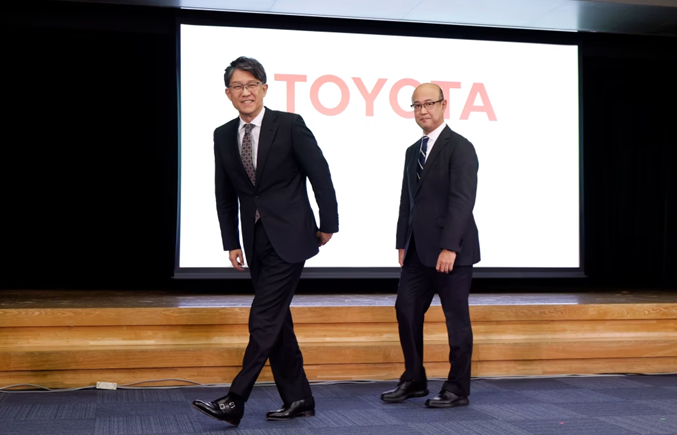
The world’s largest carmaker by sales said Friday that Chief Financial Officer Kenta Kon will take over as CEO on April 1. Sato, who was personally selected by Toyota Chairman Akio Toyoda, will transition to vice chairman and assume a newly created role as chief industry officer. Kon is considered a close ally and former secretary to Toyoda.
Unexpected Leadership Change
Industry analysts expressed surprise at the leadership shift, particularly given Toyota’s resilience during Sato’s tenure. The company has successfully navigated multiple challenges facing global automakers, including rising competition from Chinese manufacturers, the costly transition toward electric vehicles (EVs), and increasing trade tensions driven by U.S. tariffs.
Morningstar autos analyst David Whiston noted that three years is relatively short for a Toyota CEO, especially considering the company’s recent success. Akio Toyoda himself served as CEO for 14 years, from 2009 to 2023.
Strategy Focused on Hybrid Technology
During Sato’s leadership, Toyota continued to prioritize its hybrid vehicle strategy rather than fully committing to battery-powered electric vehicles. The company’s hybrid technology remains a global market leader and has helped Toyota maintain strong sales and profitability.
Toyota faced criticism earlier in the decade for not accelerating its EV transition as aggressively as competitors. However, company executives believe their cautious approach has been validated, as demand for fully electric vehicles has slowed in several key markets, particularly in the United States. Many automakers have since scaled back their EV expansion plans.
Financial Expertise Signals Strategic Shift
The appointment of Kon, a finance-focused executive, may indicate Toyota’s intent to strengthen its financial management as global trade pressures intensify. Jeffrey Liker, a professor emeritus of industrial and operations engineering at the University of Michigan, said the move suggests Toyota is prioritizing financial discipline while maintaining its reputation for high-quality products.
Toyota remains the most profitable automaker globally. However, the company estimates that tariffs introduced by U.S. President Donald Trump last year could cost Toyota approximately $9 billion during its fiscal year ending March 31.
Despite these challenges, Toyota recently raised its full-year operating profit forecast by nearly 12 percent to 3.8 trillion yen (approximately $24.2 billion), supported by a weaker Japanese yen and cost-cutting measures. The company’s shares rose about 3 percent during U.S. trading hours on Friday.
Kon’s Background and Vision
Kon is a longtime Toyota executive who built his career in accounting and finance and has served as CFO since July. Beyond Toyota’s core automotive operations, he also holds leadership roles in several company divisions. He is a director at Woven by Toyota, the company’s software-focused technology unit aimed at developing new revenue streams beyond vehicle sales. Kon also serves as a director at Toyota Fudosan, Toyota’s real estate subsidiary, which has been involved in acquiring forklift manufacturer Toyota Industries.
Speaking at a press conference announcing the leadership changes, Kon described his leadership style as financially focused while still committed to automotive excellence.
“I like cars too, but I am a finance guy now,” Kon said. “I am extremely particular about the money and the earning power needed to ensure cars are designed, engineered and manufactured properly, and that sufficient investments to do so are made.”
Looking Ahead
The leadership transition comes at a critical time for the automotive industry, as manufacturers balance technological transformation, intensifying global competition, and shifting trade policies. Toyota’s decision to install a finance-driven executive suggests the company is preparing to strengthen its financial resilience while continuing to adapt to industry changes.