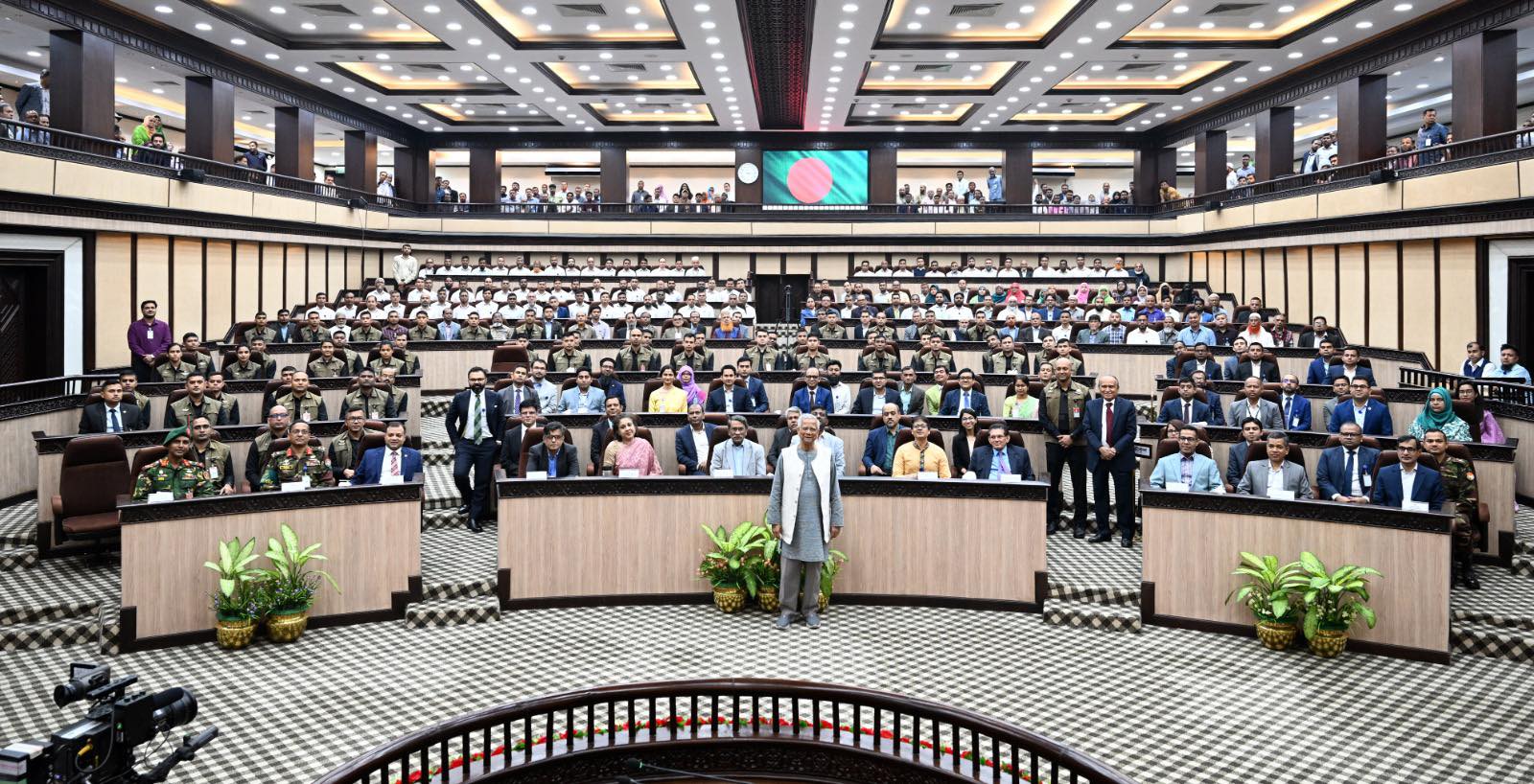
Bangladesh Interim Govt Steps Down as New Administration Set to Take Over
By Newslab Admin
Updated
7 views
Bangladesh’s interim leader Muhammad Yunus has announced his resignation, paving the way for a newly elected government to assume power. In a farewell address to the nation on Monday, Yunus confirmed that the interim administration under his leadership would step down following the completion of the electoral process. He urged the country to uphold democratic values, stating that the practice of democracy, freedom of speech, and fundamental rights established during the transition period must continue.
The 85-year-old Nobel Peace Prize laureate returned from self-imposed exile in August 2024 to serve as Bangladesh’s chief adviser after a student-led uprising forced the government of former Prime Minister Sheikh Hasina from power.
Bangladesh held its first general election since the uprising on February 12. The Bangladesh Nationalist Party secured a landslide victory under the leadership of Tarique Rahman. According to local media reports, Rahman is expected to be sworn in as prime minister when the new government takes office on Tuesday.
Yunus praised the recent polls, which observers from the European Union described as credible and competently managed, calling them a benchmark for future elections. He also commended voters, political parties, and election-related institutions for demonstrating democratic responsibility.
Strong Parliamentary Mandate
Rahman’s BNP-led alliance secured at least 212 seats in the 300-member parliament, granting it a strong governing mandate. The Jamaat-e-Islami emerged as the second-largest party with 77 seats, positioning it as the main opposition. Meanwhile, the Awami League, led by Hasina, was barred from contesting the election.
Following his party’s victory, Rahman called for national unity, emphasizing that political differences should not hinder collective efforts toward national development.
Reform Agenda Gains Public Backing
Alongside electing new representatives, voters also approved a sweeping package of democratic reforms through a national referendum. The reform blueprint, known as the “July Charter,” proposes introducing term limits for prime ministers, establishing an upper house of parliament, expanding presidential authority, and strengthening judicial independence.
The charter forms a central pillar of Yunus’s post-uprising transition agenda. According to the referendum provisions, the reforms would become binding on election-winning parties, requiring them to formally endorse the changes. However, the reforms still need ratification by the newly elected parliament.
Reflecting on the transition period, Yunus stated that the interim administration had rebuilt institutions and laid the foundation for structural reforms.
Political analyst Rezaul Karim Rony told Al Jazeera that the incoming government now faces the challenge of ensuring good governance, maintaining law and order, safeguarding public security, and establishing a rights-based state—goals widely seen as central to the aspirations of the 2024 mass uprising.