Ethical Video Marketing in the Age of AI: What Brands Need to Know
By Newslab Admin
Updated
8 views
Artificial intelligence is rapidly transforming the world of video marketing, offering brands faster, cheaper and more sustainable ways to produce content. But as AI-generated presenters and digital avatars become increasingly realistic, experts say companies must also confront growing ethical concerns surrounding transparency, trust and representation.
Video has long been one of the most powerful tools in marketing, helping brands build emotional connections and engage audiences more effectively than text or static images. Now, AI-driven production tools are reshaping the industry by allowing companies to create realistic “talking head” videos without traditional studios, crews or repeated filming sessions.
AI Reshapes Video Production
The rise of short-form content, livestreams and personalised campaigns has sharply increased demand for video production worldwide. Traditional production methods often struggle to keep pace because of high costs and logistical complexity.
AI tools now allow marketers to generate professional-quality videos within minutes using scripts, avatars and automated editing systems.
One of the biggest developments is the emergence of realistic digital presenters capable of delivering consistent messages across multiple languages and markets. Companies can now produce regional or multilingual content without reshooting footage, significantly reducing production time and expenses.
Supporters say the technology enables brands to maintain a steady flow of content while improving operational efficiency.
Ethical Questions Around AI Video
Despite its advantages, AI-generated video has raised concerns over misinformation, manipulation and audience trust.
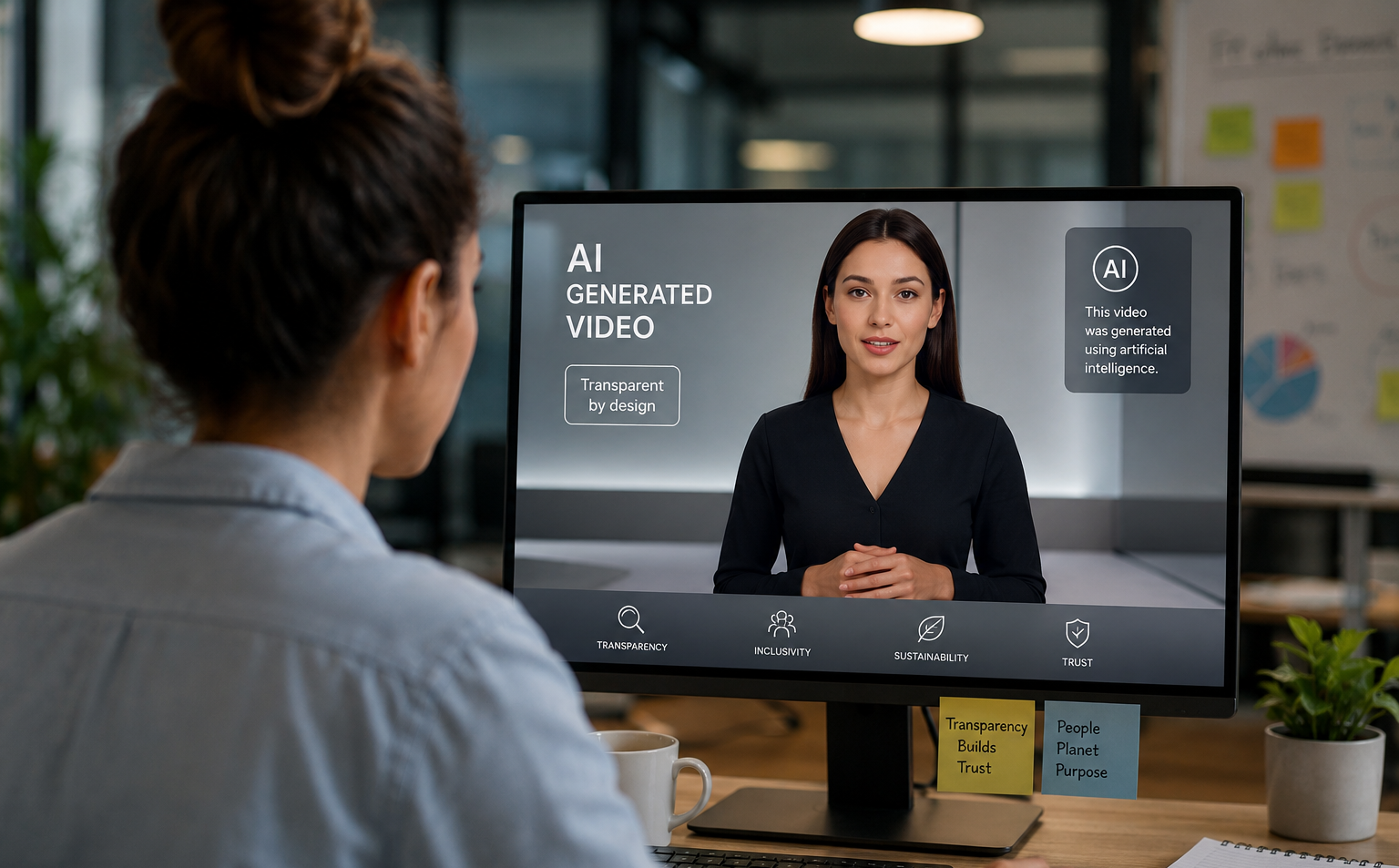
Experts argue that transparency is becoming essential as digital avatars become increasingly difficult to distinguish from real people. Brands are being urged to clearly disclose when AI-generated presenters or synthetic media are used in advertisements and public communications.
Critics warn that using AI to imitate real individuals without consent or to create misleading content risks damaging public trust and contributing to the spread of deepfakes.
Representation and inclusivity are also major concerns. Industry observers say AI-generated voices and avatars should reflect diverse ethnicities, accents, ages and cultural backgrounds while avoiding stereotypes in scripts and visuals.
Many marketing specialists now recommend audience testing, ethical review systems and diversity guidelines as part of AI-driven production processes.
Environmental Benefits of AI Production
Beyond cost and efficiency, AI video production is increasingly being promoted as a more sustainable alternative to traditional filming.
Conventional video production often involves extensive travel, lighting equipment, set construction and material waste. AI-generated content can reduce many of these environmental impacts by replacing physical production with digital workflows.
For organisations producing large-scale training materials, explainers or global marketing campaigns, the reduction in energy use and emissions could be substantial.
As companies place greater emphasis on environmental, social and governance (ESG) commitments, AI video tools are being viewed as a way to align communication strategies with sustainability goals.
Balancing Innovation and Trust
Industry experts say consumer trust will ultimately determine the success of AI-driven marketing.
Audiences may accept synthetic presenters and automated production if companies remain transparent about how content is created. Clear disclosures, visible labels and responsible use of AI are increasingly seen as necessary to maintain credibility.
Some nonprofits and global organisations are already using AI-generated videos for multilingual outreach campaigns while openly acknowledging the technology behind the content.
Observers say the brands most likely to succeed are those that combine innovation with clear ethical standards and responsible governance.
Regulation and the Future of AI Marketing
Governments and regulators are beginning to respond to the rapid growth of synthetic media technologies. Policymakers in Europe and other regions are developing rules aimed at requiring disclosure of AI-generated content and holding companies accountable for misuse.
Analysts say businesses that adopt ethical standards early — including transparency, inclusivity and sustainability practices — will be better positioned as regulations tighten.
The broader debate is no longer about whether AI should be used in marketing, but how it can be applied responsibly without undermining honesty, fairness and public trust.
A New Era for Brand Communication
AI-generated video is no longer a futuristic experiment; it is becoming a central part of modern communication strategies.
While the technology promises greater efficiency and lower environmental impact, experts stress that responsible use will define its long-term success.
For brands navigating the AI era, the challenge is not only creating content faster — but doing so in ways that remain transparent, inclusive and ethically accountable.