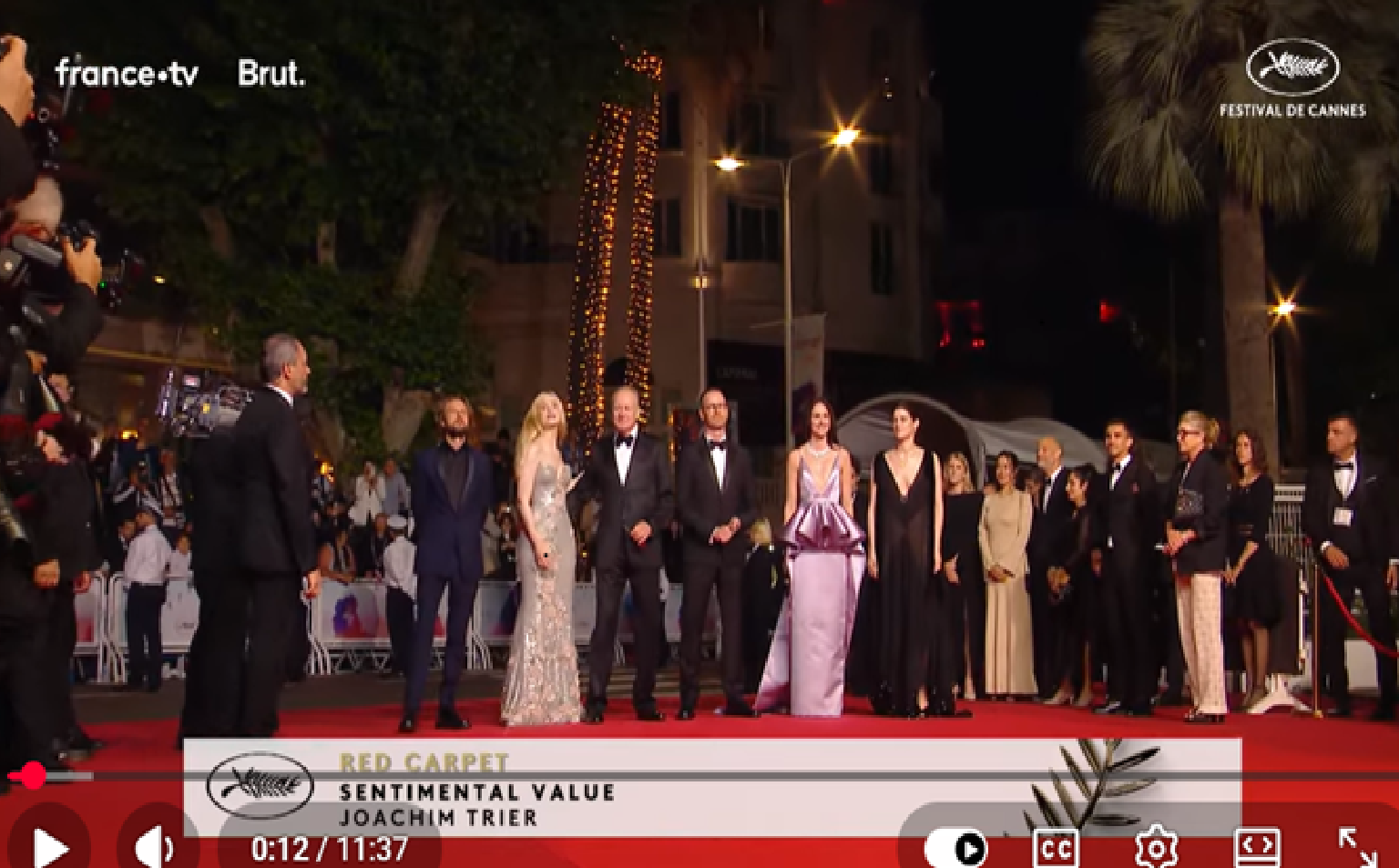
Norwegian filmmaker Joachim Trier’s latest cinematic work, Sentimental Value, has emerged as one of the most talked-about films at the 2025 Cannes Film Festival — not only for its emotional depth, but for the extraordinary audience reaction that has reignited debate over how artistic value is judged in global cinema.
Although the film ultimately received the Grand Prix — Cannes’ second-highest honour — rather than the prestigious Palme d’Or, it captured the festival’s longest standing ovation in nearly two decades: an emotional 19-minute applause that many critics interpreted as the audience’s “direct democratic vote.”
A Film About Family, Memory and Communication
Sentimental Value explores the fragile emotional landscape of a family struggling with the absence of an artist father. Through subtle symbolism and layered visual storytelling, Trier examines themes of memory, emotional inheritance, reconciliation and the unspoken tensions that shape human relationships.
The family home becomes more than a backdrop; it functions almost as a living witness to generational trauma, silence and emotional distance. Objects within the house — from furniture to fragile decorative pieces — carry emotional meaning beyond financial value, reflecting the film’s broader meditation on sentiment, memory and identity.
Rather than relying on dramatic confrontations, the film communicates through gesture, atmosphere and metaphor. A falling vase, a neglected object carried into a yard, and the silent architecture of the home itself become emotional language.
Cannes Jury vs Audience Response
The film’s reception has also revived an old debate at Cannes: the disconnect between jury selections and audience sentiment.
While the Palme d’Or represents a decision by a selected panel of jurors — a form of “representative democracy” — the standing ovation is often viewed as a spontaneous, collective audience response resembling “direct democracy.”
Critics noted that Sentimental Value received stronger emotional resonance from festival audiences than the eventual Palme d’Or winner, continuing a historical pattern in which the most passionately received films do not always secure the top prize.
Observers compared Trier’s achievement to past Cannes milestones such as Pan's Labyrinth, which also received an exceptionally long standing ovation but failed to win the Palme d’Or.
An Organic and Collaborative Creation
During Cannes press conferences, Trier and longtime collaborator Eskil Vogt described the filmmaking process as deeply collaborative and emotionally exploratory.
The screenplay reportedly evolved organically from conversations about family, adulthood and emotional vulnerability. Trier explained that the project sought to examine “the wounded child” that remains inside every adult and how art can become an indirect language for communication when words fail.
Actors including Renate Reinsve, Stellan Skarsgård, Elle Fanning and Anders Danielsen Lie praised Trier’s ability to create an emotionally open atmosphere on set.
Reinsve, who previously won Best Actress at Cannes for Trier’s The Worst Person in the World, described the director’s filmmaking environment as one built on empathy, trust and emotional honesty.
Art as a Democratic Language
At the heart of Sentimental Value lies the idea that art itself can function as a form of democratic dialogue.
The film repeatedly suggests that people rarely express their deepest truths directly. Instead, meaning emerges through creativity, shared memory and emotional gestures. Trier and Vogt portray artistic creation not as elitist expression, but as a human instinct — something natural, vulnerable and collective.
This philosophy extends beyond the story itself and into the filmmaking process, where collaboration, openness and emotional participation shaped the final work.
A Lasting Cultural Impact
Many critics believe Sentimental Value may ultimately hold greater cultural significance than some formal award winners.
The film’s unprecedented audience response at Cannes suggests a rare level of emotional universality — one that transcends jury politics or festival rankings.
As global cinema continues to grapple with questions of authenticity, artistic value and emotional connection, Trier’s latest work stands as a reminder that the most enduring films are often those that resonate deeply with audiences, not merely juries.
With Sentimental Value, Joachim Trier has delivered more than a family drama. He has crafted a meditation on memory, communication and the democratic power of emotional truth. [Source: Cannes Review Analysis]